

Consular Processing Attorney: Helping Families Secure Green Cards While Abroad
MARK A. PEREZ, ATTORNEY AT LAW
If your path to permanent residency requires you to go through consular processing, the entire process may feel overwhelming.
Consular processing can get you into the Unites States on a green card, but you have to plan strategically, prepare the right evidence, and know what to expect at each step. We can help. Mark A. Perez, Attorney at Law helps applicants like you navigate this process with ease. Call us at 214-752-0505 to schedule a consultation with a consular processing attorney now.
Table of Contents
PROTECTING YOUR FUTURE AND YOUR LIBERTY
If you're facing criminal charges, don't gamble with your future. Call me today.
When Consular Processing is Required
Consular processing is required in several common immigration scenarios, including:
- An applicant who lives abroad
- An applicant who entered the United States without inspection and is not eligible for adjustment of status
- An immigration category that requires visa issuance through a U.S. consulate
In each of these situations, final approval for a green card is granted only after completing a medical examination and attending a visa interview at a U.S. embassy or consulate in the applicant’s home country.
The Consular Processing Procedure in Four Phases
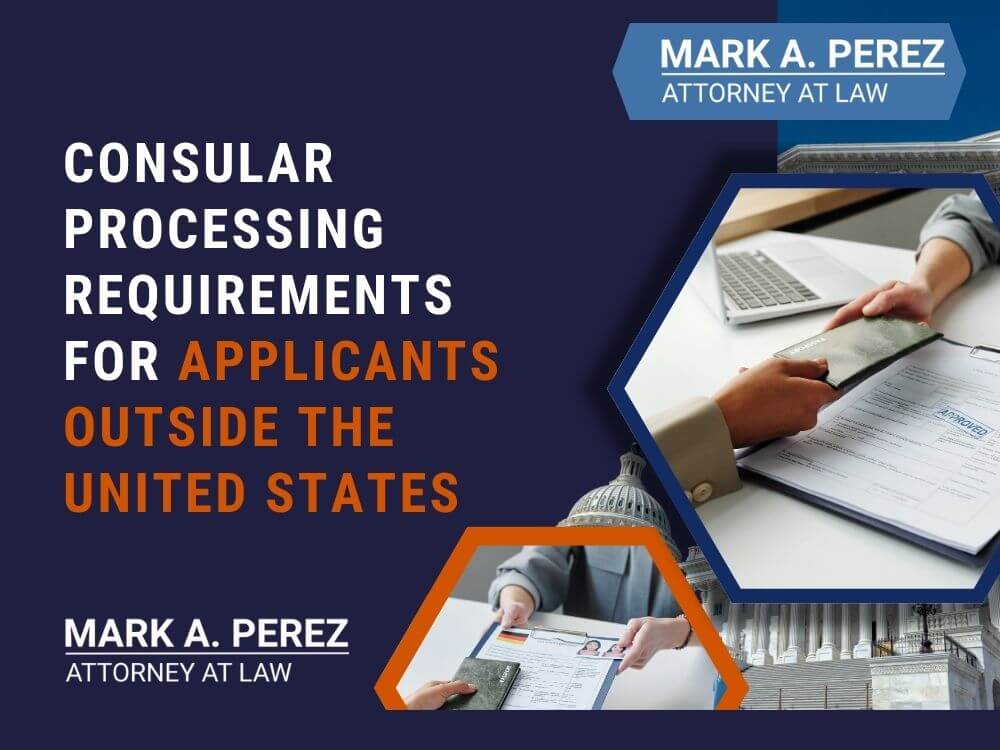
Understanding each step of the consular processing procedure can reduce uncertainty and help you prepare effectively for every stage of your immigration journey.
The phases include:
- USCIS petition approval: The process begins when a U.S. citizen, lawful permanent resident, or employer files the appropriate immigrant petition with USCIS. Once the petition is reviewed and approved, the case moves forward to the next stage.
- National Visa Center processing: The National Visa Center (NVC) manages fee payments, financial sponsorship documentation, and civil records. Applicants must submit Form DS-260 along with supporting documents such as birth certificates, marriage certificates, police clearances, and Affidavits of Support.
- The consular interview: After the NVC completes document review, an interview is scheduled at the U.S. embassy or consulate. During the interview, a consular officer evaluates your eligibility, financial sponsorship, immigration history, criminal background, and prior visa applications before deciding whether to approve your visa.
- Entry into the U.S.: If your visa is approved, you will receive a visa packet and can plan your move to the United States. Once you’re admitted by a Customs and Border Patrol officer, you are a lawful permanent resident and will receive your green card in the mail.
If your visa is not approved at the interview, your case may require additional documentation, may be placed in administrative processing, or may be denied depending on the findings.
Don't Wait. Call Us Today!
Risks of Consular Processing
Complications can arise at any stage of an immigration process, and in consular processing, there are many ways your case can get derailed or delayed.
If you ever maintained unlawful presence in the United States, leaving the country may have triggered a ban of three or ten years. This can result in immediate denial of a consular processing application. There are only a few circumstances that can waive a three or ten year ban.
If you were ever subject to removal orders or voluntarily departed the United States while in the country without legal status, you are likely to need special permission before your visa can be approved.
Consular officers will carefully review your immigration history. Any inconsistencies, false information, or prior immigration violations may result in findings of fraud or misrepresentation.
A criminal history may also affect your eligibility. Certain offenses can lead to inadmissibility, requiring applicants to seek a waiver before entering the United States.
At our law firm, we handle both criminal law and immigration law, so we know how to navigate the issues that may arise when criminal charges affect immigration.
How Administrative Processing May Affect Your Case
When the consulate places a case into administrative processing, that means that they may need extra time to review your file. They may require you to undergo security clearances, background checks, or verification of documents. Depending on what they request, this may be resolved in a matter of weeks or months.
How a Consular Processing Attorney Can Help
Consular officers have broad discretion when it comes to deciding whether or not to approve a visa application. If you misunderstand filing instructions, answer a question incorrectly, or otherwise lead them to worry that you should not be admitted, your visa could be denied outright. Proper legal preparation is essential to reduce these risks.
We go to great lengths to help you prepare for consular processing by:
- Reviewing your full immigration history before any departure
- Analyzing concerns that may lead to delays or denials
- Preparing waiver applications when necessary
- Helping you prepare for your consular interview
- Communicating with immigration officials on your behalf
Contact a Consular Processing Attorney Today!
Speak with an experienced consular processing attorney to understand your options and prepare effectively for each step of the process. Call Mark A. Perez, Attorney at Law at 214-752-0505 or send us a message online to get started.